

A useful pneumatic RFQ states what the component must do, the conditions at its installation point and the exact interfaces it must fit. Send the full model if known, pressure and flow with their measurement basis, port and thread details, required options, drawings, quantity and destination. Mark missing information as unknown and assign an owner to resolve it. The worksheet below separates a request for a candidate product from a configuration ready for an order.
Start with the decision you need from the supplier
Say whether the request is for a new selection, an exact repeat order or a replacement for an installed unit. Name the machine or branch and the component's job. For a replacement, explain whether the old unit failed, the duty changed or the machine is being redesigned. A photograph can help identify a family, but it is not a complete record of internal options, thread details or operating requirements. Keep the current part and the proposed part in separate fields.
Copy this technical RFQ worksheet into your request
Complete the following fields in an email or your own document. Use confirmed, estimated, unknown or not applicable for each entry. Add the source of a confirmed value, such as a drawing revision, machine specification or dated measurement. An unknown is a question to resolve; it must not silently become the supplier's default. This is a writing template, not an online upload or submission form.
| Field | Information to enter | Status and evidence |
|---|---|---|
| Request and identification | New selection / repeat / replacement; full existing code; requested function | Status: ___; label or drawing reference: ___ |
| Installation point and medium | Machine or branch identifier; compressed-air condition and upstream treatment | Status: ___; specification or observation: ___ |
| Pressure | Minimum available, normal and maximum expected inlet pressure; pressure during demand; required outlet pressure; allowable pressure drop | Units and gauge/absolute basis: ___; measurement point: ___ |
| Flow and duty | Normal and peak flow through this component; cycle timing and simultaneous users | Units and reference pressure/temperature/humidity: ___; source: ___ |
| Air requirement | Equipment supplier's particle, moisture and oil requirements at the named point; lubrication permitted or prohibited | Required document and point: ___; unresolved criteria: ___ |
| Connections and mounting | Port size, exact thread and sealing arrangement; flow direction; mounting and available space | Drawing revision: ___; dimensions still unconfirmed: ___ |
| Controls and options | Manual, pneumatic or electrical control; applicable voltage/wiring; drain, gauge, bowl and accessories | Full requested code: ___; option evidence: ___ |
| Environment and access | Ambient and air temperature; installation exposure; access for operation and servicing | Measured or specified conditions: ___; responsible person: ___ |
| Documents and acceptance | Required document name, model scope, destination market and technical acceptance criteria | Required by: ___; supplier confirmation: ___ |
| Commercial context | Sample and production quantities; destination; target delivery date; requested quotation basis | Quantity: ___; destination: ___; target date: ___ |
Give pressure and flow numbers a usable context
For air-preparation components, distinguish a compressor's output from the flow through the requested branch. Say where a flow reading was taken and which users were operating. Record the flowmeter's units and reference conditions rather than changing L/min into NL/min or SCFM without a defined basis. Pair the pressure and flow observations from the same operating condition. The XMC HDA flow charts identify inlet-pressure conditions and an ANR airflow axis; a port size alone does not describe that operating point. [1] If the measurement basis is missing, ask for it before comparing a reading with a catalogue curve.
Add the short brief for the product family
The common worksheet gives the supplier context. Add the family-specific questions below to focus the review. These are purchasing prompts, not a complete design, safety assessment or claim that every configuration is available. The named families and functions follow the XMC catalogue; exact codes, limits and supporting documents still need confirmation for the offered unit. [1-6]
| Family or task | Add to the common worksheet | Confirm in the reply |
|---|---|---|
| HA / HDA air preparation | Functions needed: filtration, regulation and whether oil addition is permitted; branch demand; drain and gauge preferences | Exact assembly and components, full option code and relevant flow/dimension references |
| HVHS venting/isolation or HAV startup control | Required operating sequence, supply/exhaust connections, controls, installation drawing and machine safety requirements | Exact valve/control version and its documented function; a lock hole or soft-start description is not a safety rating |
| HAFM / HDAFM mist separation | Upstream treatment, contamination requirement at the named point, operating flow and drain conditions | Exact separator and evidence supporting the required outlet condition; a family name does not establish an air-quality class |
| HIR precision regulation | Manual or air-operated configuration, required setting range, available supply, demand changes and mounting arrangement | Exact setting/control version and documented performance conditions; do not assume all HIR entries have identical options |
For replacements, record what must stay the same
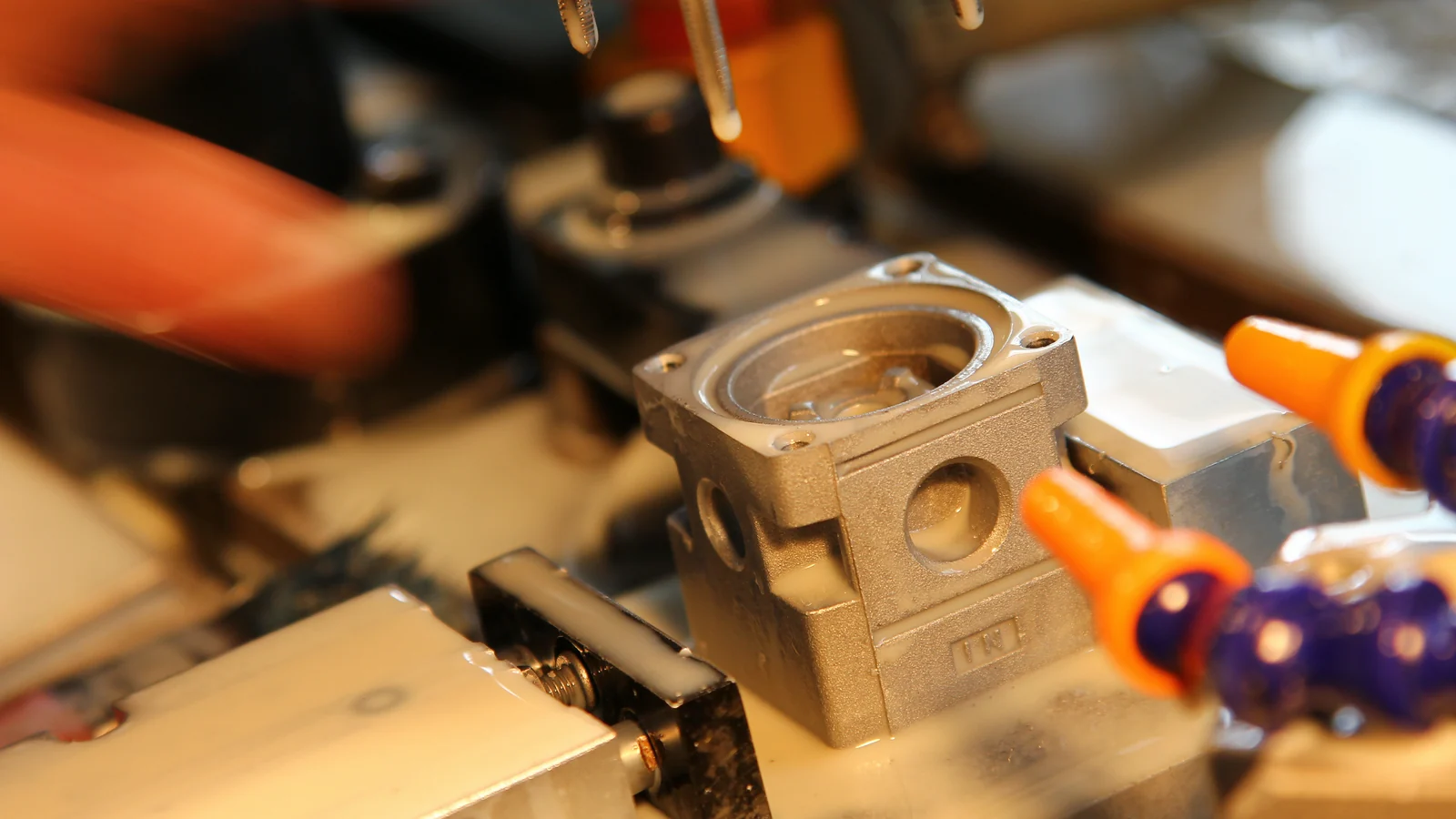
Put the existing label photo, installation drawing and proposed code together. Identify which dimensions and functions are fixed and which may change. Include the thread standard and sealing arrangement, mounting hole positions, flow direction, control connection and space needed to operate or service the unit. Ask the supplier to mark differences against the same drawing revision. Similar appearance or nominal port size does not confirm interchangeability.
Turn missing inputs into a short action list
A partially complete request can begin a discussion, but the quotation should identify its assumptions. Give each open item an owner, evidence to obtain and a decision it affects. The following entries are illustrative blanks, not a customer case. Keep them with the RFQ revision so a later email answer does not get detached from the configuration being quoted.
| Open item | Owner and evidence needed | Decision before order release |
|---|---|---|
| Thread not confirmed | Buyer: obtain labelled drawing or verified fitting identification; due: ___ | Supplier confirms the exact connection and sealing arrangement |
| Flow reference state missing | Buyer / instrument supplier: provide meter specification and operating record; due: ___ | Selection comparison uses an agreed basis |
| Drain or control option unclear | Supplier: return the complete proposed code and applicable option documentation; due: ___ | Buyer accepts the exact configuration or requests a revision |
| Document requirement unresolved | Buyer: name document and market scope; supplier: confirm applicability to the offered model; due: ___ | Availability and acceptance criteria are explicit before the order is approved |
Keep documents and commercial requirements specific
State the sample quantity separately from the planned production quantity, the destination and the requested delivery date. Treat dates as requirements until the supplier confirms them. For certification or test documentation, give the exact document name, applicable product scope and destination-market requirement. A company certificate or catalogue logo alone does not establish that the offered configuration meets a particular application requirement. Ask for applicable evidence rather than writing a general request for every certificate. No stock, lead time or certification is promised by this worksheet.
Check the supplier reply against the same RFQ revision
Before releasing an order, compare the reply with the completed worksheet: full proposed model, included accessories, operating conditions used for selection, connection and installation drawing, deviations, open items, documents, quantities and delivery terms. Ask the supplier to identify assumptions explicitly. A blank response is not confirmation, and a proposed future test is not a passed result. If the configuration or duty changes, issue a revised brief and keep the earlier answer as history.
Send the worksheet and the relevant evidence together
Use a subject such as "RFQ - machine/branch - requested function - revision". Include the completed fields, open-item list and document references in the message. For drawings and photos, provide an accessible link that the recipient may use, or send attachments directly by email using the contact details on the XMC contact page. Explain which file and revision governs the request. Do not rely on a screenshot of one model code to communicate the full technical requirement.
Questions buyers ask.
Can I request a quotation without an exact pneumatic model number?
Yes. Describe the required function, operating conditions and interfaces, and provide available drawings or photographs. Mark the model as unknown. Ask for a proposed configuration and the assumptions behind it; identification is not the same as confirmed suitability.
What should I do if pressure or flow data is missing?
Mark it unknown, identify who will obtain it and ask which selection decision it affects. Keep the measurement point, units, reference conditions and duty pattern with the value when it becomes available. Do not invent a figure to complete the form.
Is the same port size enough to order a replacement?
No. Compare the complete function and code, thread and sealing arrangement, dimensions, controls, operating conditions and required accessories. Obtain explicit confirmation of any differences before approving the replacement.
Should certification requirements be included in the RFQ?
Yes. Name the required document, destination market, product scope and acceptance criteria. The supplier must confirm applicable evidence for the exact offered configuration; a general brand or catalogue mark is not that confirmation.
Can I upload drawings through this article?
This article is a copyable checklist, not an upload form. Send an accessible drawing or photo link, or email attachments using the published XMC contact details. Identify the file revision in your request.
Does an RFQ response guarantee stock or a delivery date?
Only the supplier's confirmed quotation or order terms establish the applicable commercial commitment. State your requested quantity and schedule clearly and ask for confirmation for the exact configuration.
Technical references
- [1] XMC product catalogue, edition 21 June 2025, printed pages 48-49: HDA/HDAC functions, complete ordering fields, drawings and flow curves. https://www.xmcfluid.com/assets/documents/product-pdfs/en/hda-series-air-preparation-units.pdf
- [2] XMC product catalogue, edition 21 June 2025, printed pages 24-25: HA combination functions and component entries. https://www.xmcfluid.com/assets/documents/product-pdfs/en/ha-series-air-preparation-units.pdf
- [3] XMC product catalogue, edition 21 June 2025, printed page 80: HVHS venting valve identification and drawings. The catalogue name is not a machine safety certification. https://www.xmcfluid.com/assets/documents/product-pdfs/en/hvhs-venting-safety-lock-out-valve.pdf
- [4] XMC product catalogue, edition 21 June 2025, printed pages 81-82: HAV startup function, control ordering fields and drawings. https://www.xmcfluid.com/assets/documents/product-pdfs/en/hav-soft-start-valve.pdf
- [5] XMC product catalogue, edition 21 June 2025, printed pages 32-33 and 60: HAFM and HDAFM identities, ordering fields and specification context. https://www.xmcfluid.com/assets/documents/product-pdfs/en/hafm-mist-separator.pdf ; https://www.xmcfluid.com/assets/documents/product-pdfs/en/hdafm-mist-separator.pdf
- [6] XMC product catalogue, edition 21 June 2025, printed pages 76-77: HIR setting/control choices, ordering and model distinctions. https://www.xmcfluid.com/assets/documents/product-pdfs/en/hir-precision-regulator.pdf
- The RFQ worksheet, status labels and open-item record are editorial purchasing aids. They are not XMC test results, a product approval, a safety procedure or a complete system specification.
Put the guide to work.
Choose the relevant XMC series, download its product PDF and include the application details with your inquiry.