
Pneumatics for automotive assembly.
Component assembly and inspection stations bring together fixtures, actuators and machine controls. Define the operating sequence, load and restart behavior so that each part of the pneumatic circuit has a clear role.
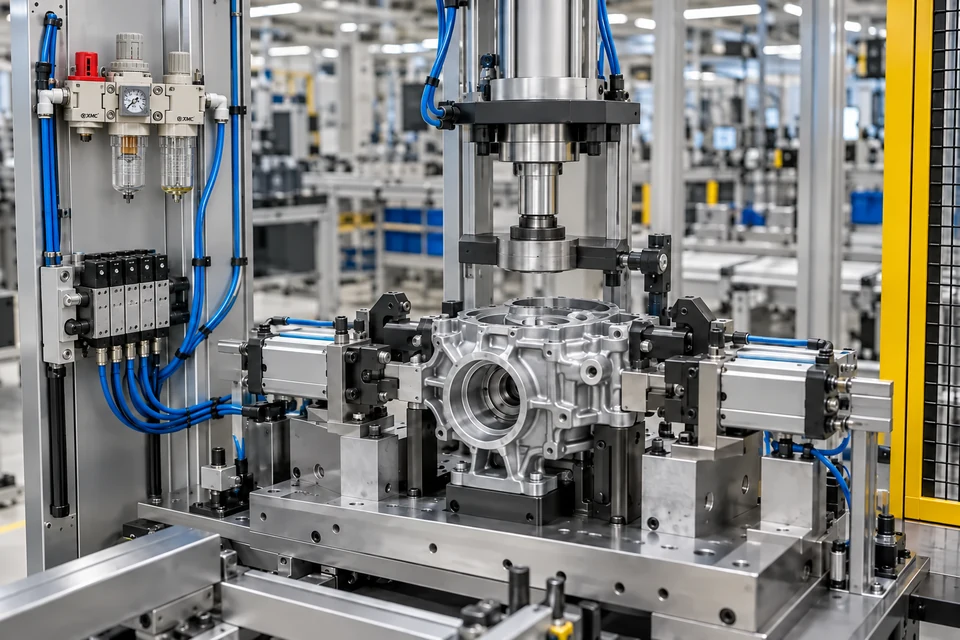
Where pneumatics fit.
Assembly fixtures
Pneumatic actuators can hold or position components in a fixture. The required force, contact points and part support determine the mechanical arrangement.
Pressing and transfer
Linear cylinders can operate pressing or transfer mechanisms where the load and motion requirements suit pneumatic actuation. Specify the force across the full working stroke.
Controlled pressure buildup
A soft-start valve limits initial filling flow before opening for normal flow. Review the downstream volume and intended startup sequence with the complete circuit.
Components to consider.
Explore the product range, then check the model specifications for your circuit.
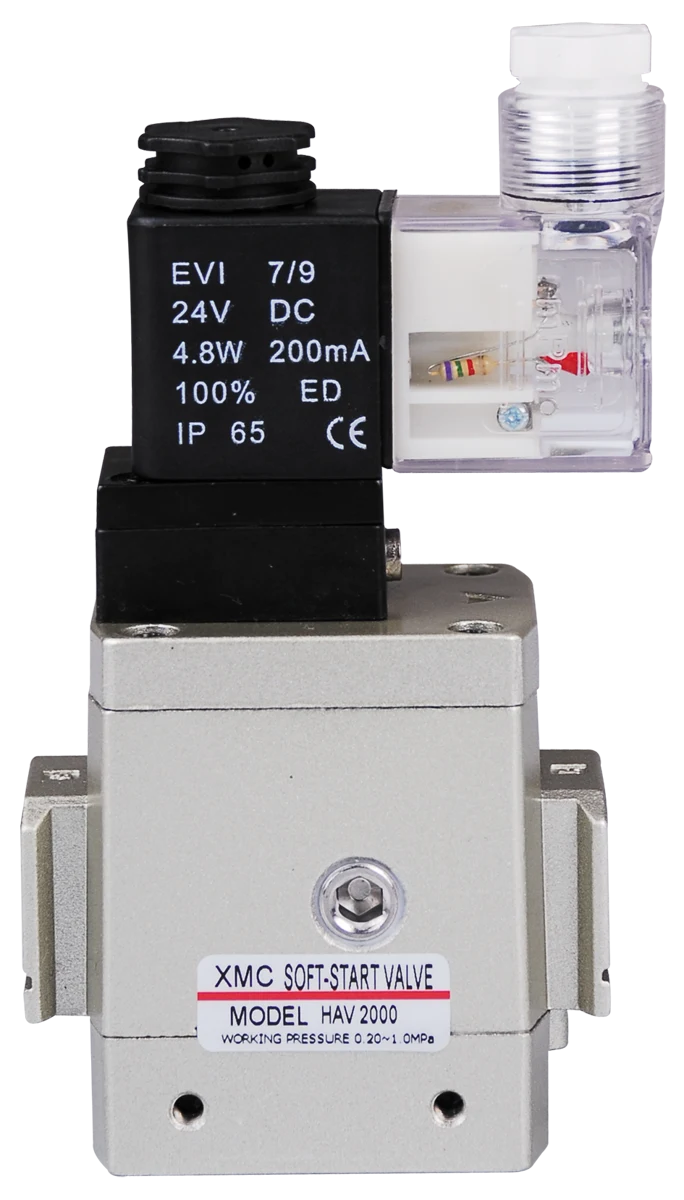
HAV soft start
Build pressure gradually
HAV provides adjustable initial filling flow and modular connection to air-preparation units. Select electrical or pneumatic control for the assembly.
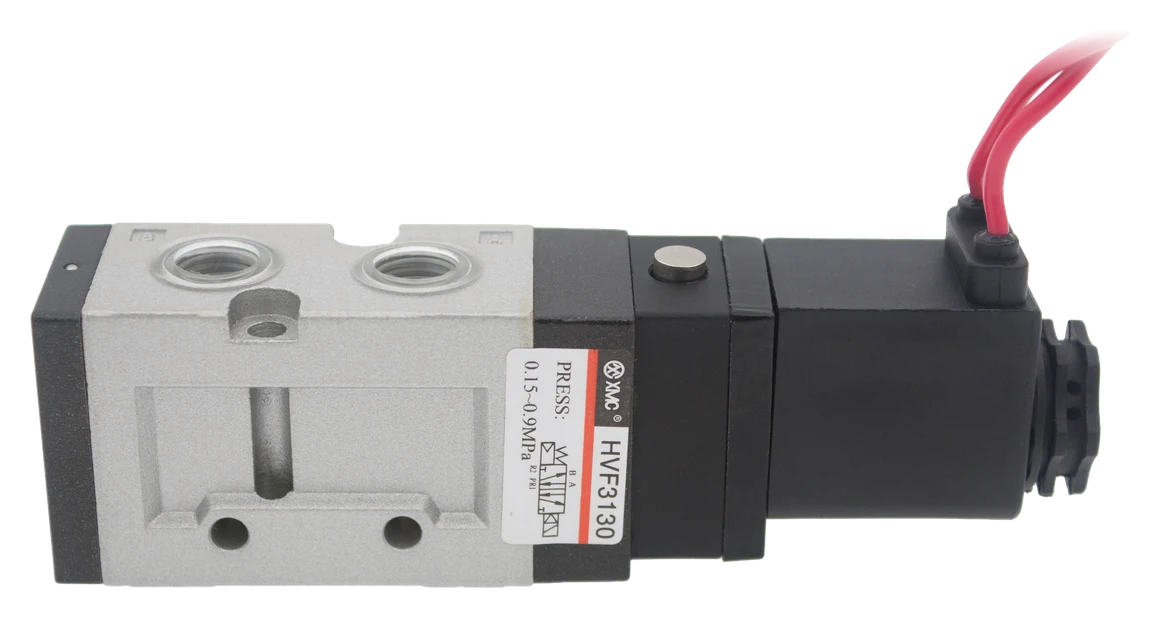
HVF solenoid valves
Run the motion sequence
Switch compressed-air flow to the actuators. Choose the solenoid arrangement, coil voltage and connector to suit the control circuit.
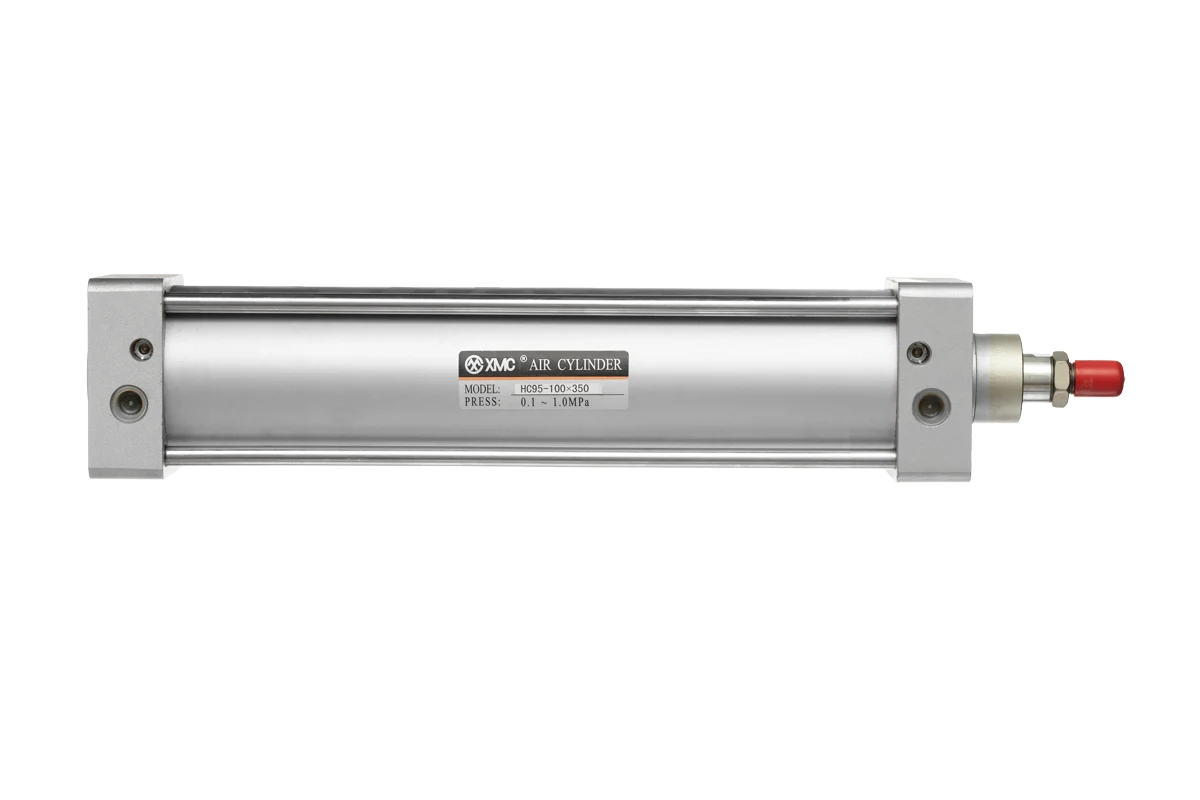
HC95 cylinders
Drive fixture motion
Tie-rod cylinders provide linear travel for suitable fixture and handling duties. Check bore, stroke, mounting and the way the external load is supported.
Before you choose.
Use these details to narrow the selection with XMC.
- Assembly task
- Part mass, pressing or holding force, stroke and fixture drawing.
- Operating sequence
- Cycle time, simultaneous actuators and the required startup behavior.
- Supply and controls
- Air pressure, downstream volume, valve voltage and wiring.
- Installation
- Mounting space, duty cycle and the machine-level isolation requirements.
Guides for this application.
Talk through your application.
Share the fixture drawing, assembly sequence, force and stroke requirements, control voltage and quantity.