
Pneumatics for light-industry machinery.
Textile machines, print-finishing equipment and light assembly or packaging lines share many pneumatic tasks: feed, grip, position and push. Build the selection around the material being handled and the motion each station needs.

Where pneumatics fit.
Textile and garment machinery
Pneumatic mechanisms can grip fabric or operate feeding and clamping devices. Specify travel and contact force with the fabric-handling arrangement.
Printing and finishing
Sheet stops, clamps and side pushers position paper during folding, binding or stacking. Review timing, actuator travel and the available mounting space.
Light assembly and packaging
Stops and pushers guide parts or closed cartons between stations. Size the circuit for repeated motion and the number of actuators working at once.
Components to consider.
Explore the product range, then check the model specifications for your circuit.
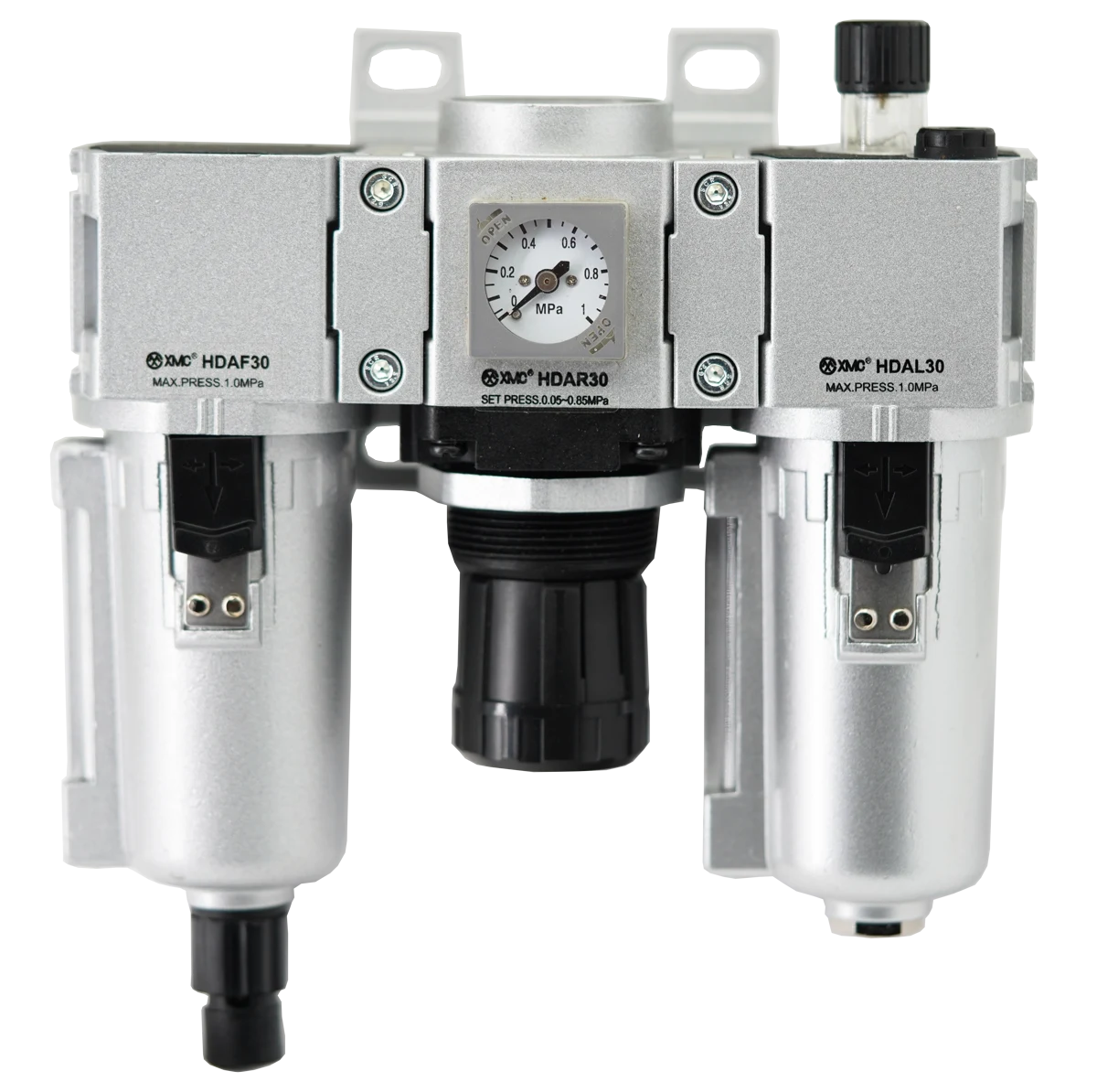
HDA air preparation
Prepare air at the line
Select filters, regulators and combinations for the machine supply. Add lubrication only where the downstream equipment requires it.
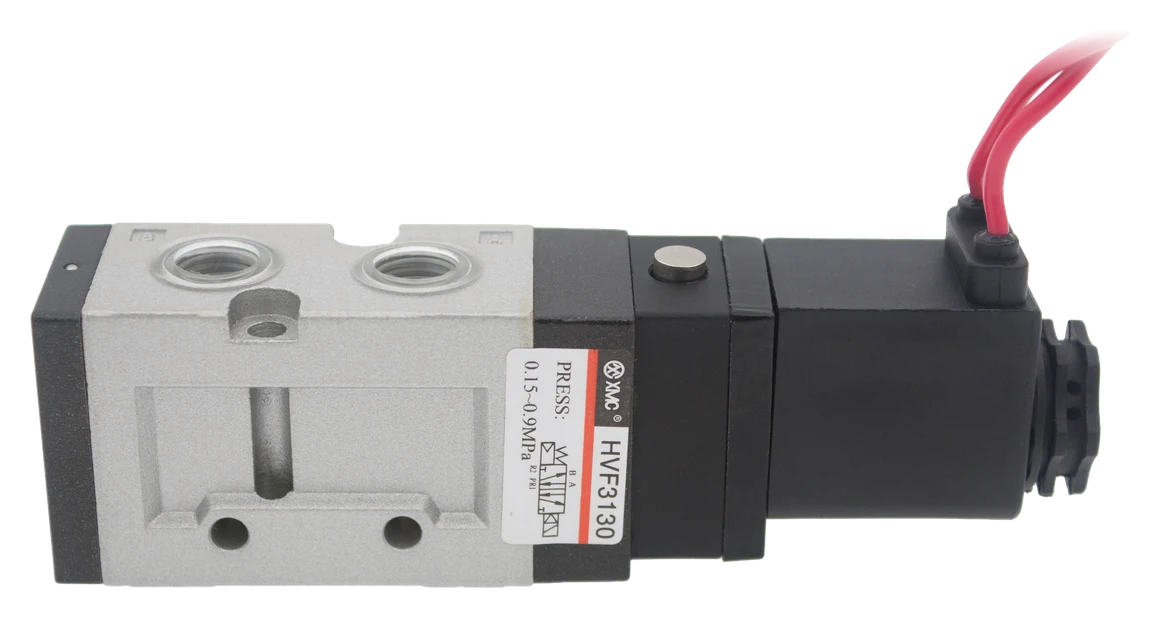
HVF solenoid valves
Sequence feeding and pushing
HVF valves switch air to pneumatic actuators. Match the operating mode, voltage and wiring to the line controls.
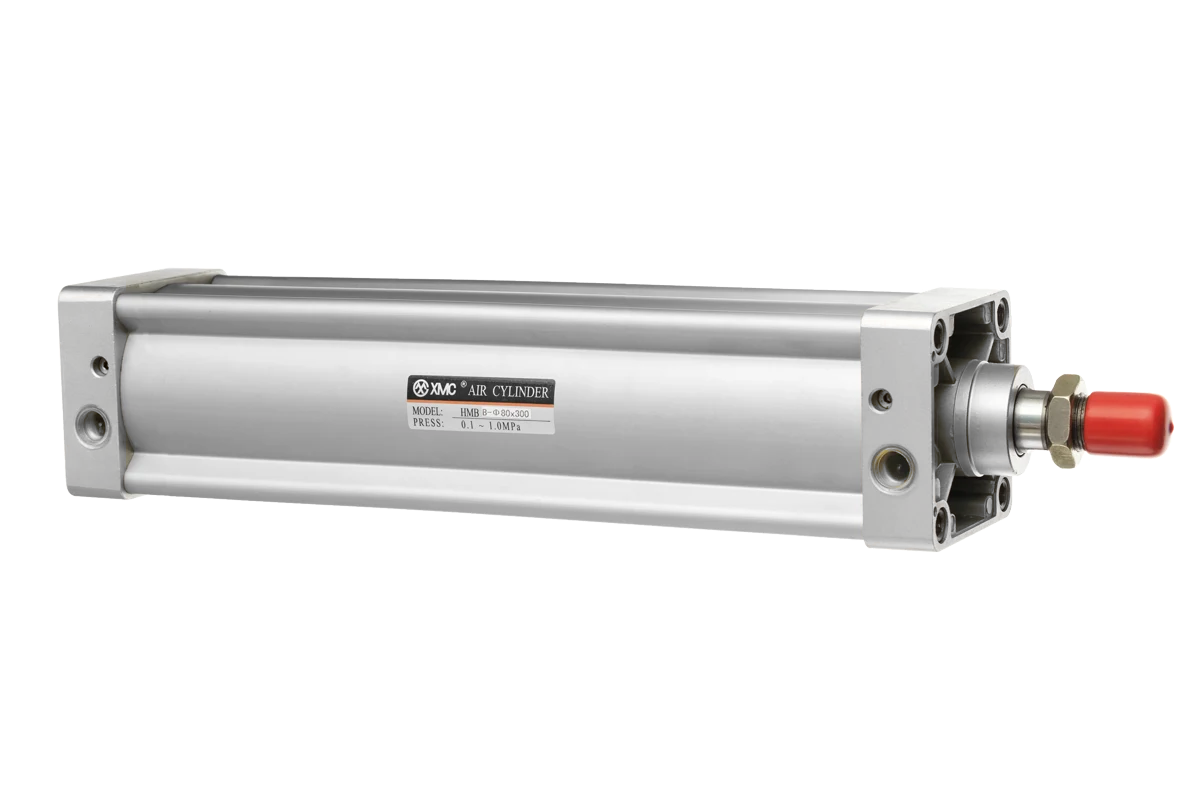
HMB cylinders
Provide linear movement
HMB double-acting cylinders provide linear motion with air cushioning. Select bore, stroke, rod arrangement and mounting for the mechanism.
Other air preparation options.
- HA air preparation
Compare HAC combination sizes where the equipment calls for filtration, pressure regulation and oil-mist lubrication.
- HAF large-port filters
For larger compressed-air distribution lines, compare HAF port sizes, catalogue flow conditions and drain configurations.
Before you choose.
Use these details to narrow the selection with XMC.
- Handled material
- Fabric, paper, parts or cartons; include size, weight and contact constraints.
- Motion sequence
- Feeding distance, clamping force, cycle rate and simultaneous movements.
- Air preparation
- Available pressure, expected flow, condensate drainage and lubrication requirements.
- Line environment
- Dust, cleaning conditions, mounting space and control voltage.
Guides for this application.
- HDAL Lubricator Minimum Flow: Why Is the Oil Not Dripping?
- How to Select Air Preparation Units for a Pneumatic System
- Two-Piece vs Three-Piece FRL: Choosing an XMC HDA Combination
- FRL Installation Checklist: Airflow, Drainage and Commissioning
- Air Regulator vs Precision Regulator: How to Choose
- Air Filter vs Mist Separator: When Is 5 Micron Not Enough?
- When to Replace a Pneumatic Air Filter Element
- Water After an Air Filter: When Does Your System Need a Dryer?
- 5 vs 25 vs 50 Micron Pneumatic Filters: How to Choose
- Air Regulator Pressure Drops Under Load: Causes and Checks
- Manual vs Automatic Air Filter Drain: How to Choose for HDA
Talk through your application.
Describe the line, handled material and movement sequence, and include pressure, voltage, installation space and quantity.